Interview with sigma nu's 69th regent steve ratterman (Indiana)
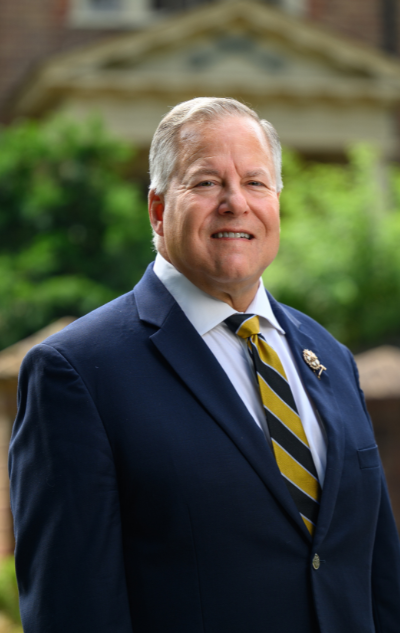 Could you introduce yourself and share more about your professional background and experience serving the fraternity and sorority community?
Steve Ratterman: After more than 20 years in the insurance industry, I had the opportunity to evolve my career in a way that brought me deeper into service to Sigma Nu. That path led me to join the staff team and serve as President of Fifth Point Properties, the Fraternity’s housing arm.
Following that chapter, I founded CSL Management, a company providing fraternity and sorority housing management services on more than 150 campuses nationwide. About a year and a half ago, I sold the company to my younger brother—a member of Beta Theta Pi—who now leads the firm. After stepping away, I accepted the role of CEO of FRMT, our insurance company, which serves Sigma Nu and 23 other Greek-letter organizations across the country.
Throughout this journey, I’ve had the privilege of serving the fraternity and sorority community in multiple capacities—both professionally and as a volunteer. As I often say, I’ve had a unique seat on the bus. Those varied experiences have shaped my perspective and continue to inform how I approach serving as the Fraternity’s 69th Regent.
You became an initiated member of Sigma Nu at Beta Eta Chapter at Indiana University. What about the Fraternity or the collegiate chapter drew you to Sigma Nu?
When I attended a recruitment weekend—which happened to coincide with Little 500—it didn’t take long to sell me on fraternity life. For those who may not know, Little 500 is the annual bicycle race hosted by Indiana University. As a senior, I even had the opportunity to serve on the committee that organizes the event.
That first weekend was simply a great experience of brotherhood—getting to know the men in the house and enjoying time together. I like to tell people that at one point during the evening, I was standing outside with Rick Bail, who eventually became my fraternity father (big brother), talking about Sigma Nu and Beta Eta. After about 15 or 20 minutes, I looked around and realized I was casually chatting with 10 of the 12 members of the 1976 NCAA championship basketball team.
At that moment, I thought, “This is pretty special.” So the next morning, when I was handed a bid card, it didn’t take long for me to sign it.
What I later learned was that the basketball team liked spending time at Beta Eta. We always had a few players around, and several chapter members were on the team as well. More importantly, we had a great mix of student-athletes and men deeply committed to academics. It was a diverse, well-rounded group, which made the house an interesting and fun place to live, which I did for all four years.
Are there any particular memories or lessons that have remained with you since your collegiate experience?
The biggest lesson I learned was simply getting up every day and doing your best. As candidates, we were really taught that. Get up, take a shower, get cleaned up, get ready for the day, and get yourself to class, because that’s why you’re here: for your education. That mindset helped me stay focused.
The other major lesson was looking out for one another. That was central to our chapter culture. Some days that meant having difficult conversations; other days it meant quietly supporting a brother who needed help. Those lessons have stayed with me ever since.
You’ve been volunteering for Sigma Nu for nearly forty years. Looking back, what first inspired you to give so much of your time and talent to the Fraternity?
Much of it goes back to our chapter’s long history of service to the General Fraternity. I’m the sixth Regent to come from Beta Eta Chapter. I never began this journey expecting to serve as Regent—I simply wanted to give back.
Early Sigma Nu influences included leaders such as Herman B Wells, our third Regent, and Bill Armstrong, a trustee who played a role in my journey to becoming a brother of the Fraternity. Later, seeing Past Regents Don Densborn and E.G. White continue that legacy of service kept me engaged nationally.
The more I’ve tried to give back, the more I’ve realized how much I owe Sigma Nu. You never truly catch up—you simply continue returning what you’ve received.
In your inaugural address in San Antonio, you highlighted several Sigma Nu “heroes.” Are there other Sigma Nu brothers you would want to emphasize, and what should collegiate brothers learn from their example?
There are probably five individuals who come to mind. Four of them—Brothers Mike Long (Drury), E.G. White (Indiana), Dan Rodriguez (Arizona State), and Howard Pickett (North Carolina State)—are almost inseparable as a group. All are Past Regents from different chapters and now members of the Hall of Honor. They met as Division Commanders at the Grand Chapter in Snowbird, Utah, and formed lifelong bonds that exemplify brotherhood over nearly five decades.
They served during a critical period when continuity of leadership was essential, and they helped guide the Fraternity forward while remaining deeply committed long after their terms ended.
Another leader I greatly admire is Past Regent Robert Durham (Georgia). His creation of Task Force Hopkins marked a turning point by establishing chapter strength as the Fraternity’s top strategic priority—a focus that remains vital today.
Robert often speaks about an “obligation to excellence” and reminds us that there is no honor in mediocrity. That philosophy continues to shape Sigma Nu in meaningful ways.
You’ve challenged the Fraternity to recommit to “Excelling with Honor.” What does that mean to you today?
As I’ve grown older, our principles—Love, Honor, and Truth—have become increasingly meaningful to me. “Excelling with Honor” serves as both our vision and our guiding light. It represents an ideal we continually pursue, even knowing perfection is unattainable.
Having helped adopt that vision statement 25 years ago as a member of the High Council, I’ve personally embraced it as my North Star. But we cannot ask chapters to live that vision unless we model it ourselves. Leadership begins with example.
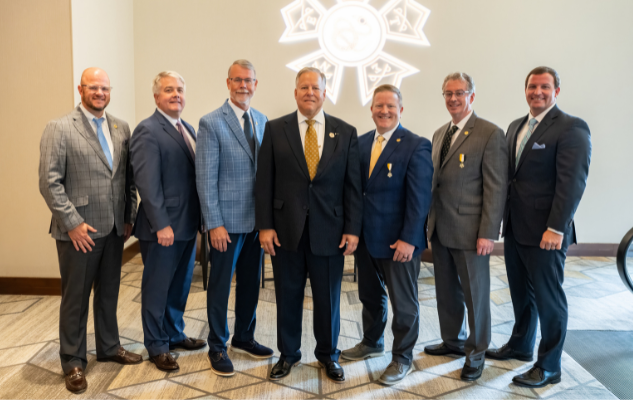
You’ve expressed interest in renewing Task Force Hopkins. What do you hope to accomplish through its continued work?
When Past Regent Durham launched Task Force Hopkins 15 years ago, the goal was to identify best practices and provide chapters with the resources needed to succeed. It has been transformational, as reflected in record numbers of Rock Chapters.
However, it’s time to revisit that work.
Two areas are especially important moving forward. First, we must better address the differing needs of large and small chapters. Second, we must strengthen alumni engagement, which remains the common denominator among high-performing chapters. Sustained alumni involvement is essential to building Rock Chapters and maintaining excellence.
Why is communication such a critical priority right now?
Communication has always been important—but today, it is exponentially more complex. There was a time when information arrived primarily by mail, and even then, it felt overwhelming. Now, the volume and speed of information—delivered both in print and, especially, through digital channels—have accelerated so dramatically that keeping up can feel nearly impossible. To be effective, we must learn how to cut through the noise.
Recent NIC research confirms that communication drives alumni engagement. People give and volunteer where they feel connected. If we want alumni engaged—particularly at a time when young men need mentorship—we must communicate effectively across multiple platforms.
That means email, podcasts, print, text messaging, and social media, often delivered through multiple touchpoints. Communication is not optional; it is a strategic investment essential to engagement, fundraising, and brand awareness.
You concluded your address with an analogy about being a “pebble or a boulder.” What does that mean and what practical first step can brothers take to make an impact?
It’s easy to assume a boulder has the greater impact rolling down a mountain—but sometimes even the smallest pebble can trigger an avalanche. Brothers should never underestimate the value of their individual contributions.
When I began volunteering in 1987, I simply wanted to make a small difference. That remains the message: do something. Don’t stand still.
Organizations are either moving forward or falling behind. Even modest actions—donating $10 a month, mentoring a young brother, or helping start an alumni club—create lasting impact over time.
With nearly 170,000 living Sigma Nus, if each of us commits to being that pebble, imagine the avalanche of excellence we can create together.